
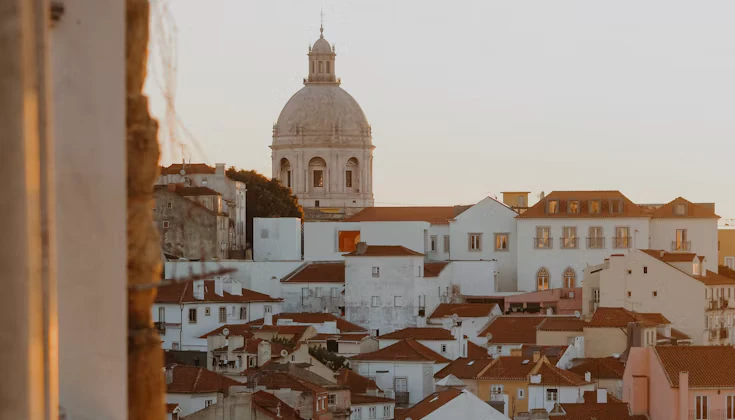
Alfama: The Medieval Soul of Lisbon
Alfama is one of Lisbon’s most atmospheric neighbourhoods. Its narrow streets, steep stairways and small squares offer a glimpse of a city that developed long before the broad avenues of modern Lisbon.
A neighbourhood shaped by history
Lisbon was under Muslim rule for several centuries before the Christian conquest in 1147. Alfama’s name is generally traced to the Arabic al-hamma, associated with hot springs. The neighbourhood’s origins, however, are complex, and its present-day street pattern reflects centuries of urban development.
Unlike Baixa, which was extensively rebuilt after the earthquake of 1755, Alfama retained much of its irregular layout. Its maze of lanes and passages reflects the gradual growth of the neighbourhood rather than a single reconstruction plan.
Everyday life in the old city
Alfama is best explored on foot. Behind its colourful façades, you will find tiled walls, traditional doorways, tiny cafés and staircases leading towards unexpected viewpoints over the Tagus River.
The district is also closely associated with fado, Portugal’s expressive musical tradition. Although fado developed across Lisbon, Alfama remains one of the best-known places to experience it, particularly in small restaurants and traditional venues.
Discovering Alfama today
Alfama has changed considerably as tourism has grown, but its historic streets still offer a different perspective on Lisbon from the monumental squares of the city centre.
Look beyond the famous viewpoints. Notice the architectural details, listen to conversations drifting from cafés and explore the little passages connecting one street to another.
In Alfama, history is not confined to museums. It is part of the neighbourhood itself, waiting to be discovered around the next corner.
